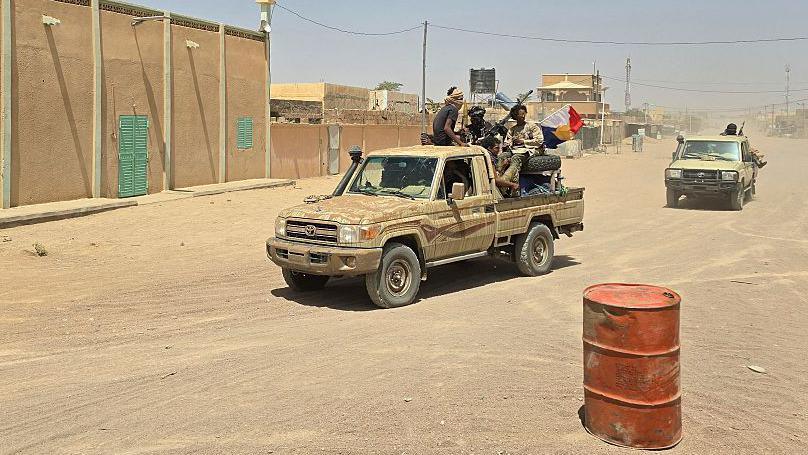
Mali’s northern desert stronghold of Kidal is once again in flux. After years of contested control, Russia’s Africa Corps has confirmed it is pulling out of the region — a move sparked by intensifying insurgent attacks and a recalibration of Moscow’s military priorities across the Sahel. This withdrawal isn’t just a routine redeployment. It signals a turning point in the evolving alliance between Mali’s junta and Russian security forces, and it opens a dangerous power vacuum in one of West Africa’s most volatile zones.
The decision follows a series of high-profile attacks on military convoys and outposts in the Kidal region, targeting both Malian forces and their foreign allies. Insurgent groups, including factions linked to ISIS and al-Qaeda, have exploited the instability, mounting coordinated assaults that have eroded control over key supply routes and urban centers.
Russia’s Africa Corps — widely seen as the successor to the Wagner Group after its formal restructuring post-2023 — has been a critical force in Mali’s fight against insurgents. But its presence has also drawn international scrutiny, with allegations of human rights abuses and resource exploitation. Now, its departure from Kidal raises urgent questions: Who will fill the void? What does this mean for Mali’s security strategy? And how will regional dynamics shift in the wake of this retreat?
The Strategic Importance of Kidal
Kidal is more than just a remote desert town — it’s a geopolitical flashpoint. Located in northeastern Mali, near the borders of Niger and Algeria, the region sits atop critical smuggling routes and has long been a haven for Tuareg separatists and jihadist factions.
The terrain is unforgiving — vast, arid, and difficult to patrol. But control over Kidal means control over movement across the central Sahel. For the Malian government, holding Kidal is symbolic as much as strategic. It represents sovereignty over a region that has repeatedly slipped from central authority.
Russian forces, under the Wagner banner and now Africa Corps, were invited in 2021 to bolster Mali’s military after French and UN peacekeepers began withdrawing. They brought air support, armored vehicles, and a ruthless counterinsurgency model. In Kidal, they established forward operating bases, conducted joint patrols, and carried out targeted strikes.
But the security gains were fragile. Local populations resented the heavy-handed tactics. Meanwhile, insurgents adapted — shifting to asymmetric attacks, IEDs, and ambushes in the rugged Adrar des Ifoghas mountains.
Why the Withdrawal Now?
The Africa Corps’ confirmation of withdrawal came after a string of devastating attacks in late 2023 and early 2024. In one incident, a convoy carrying supplies from Gao to Kidal was ambushed, resulting in multiple casualties and the loss of equipment. Another attack targeted a joint Malian-Russian checkpoint, killing at least six soldiers.
These weren’t isolated events. They were part of a broader pattern of escalating violence that exposed the logistical strain of maintaining a presence in such a remote and hostile environment.
Insiders suggest the decision wasn’t taken lightly. Russia’s military planners assessed that the cost-benefit ratio had shifted — the risks of maintaining forces in Kidal now outweighed the strategic advantages. Key factors included:
- High operational costs: Transporting fuel, food, and ammunition across hundreds of kilometers of desert is expensive and dangerous.
- Limited intelligence: Unlike in urban centers, Africa Corps struggled to establish reliable local networks in Kidal’s tribal and nomadic communities.
- Political friction: Reports surfaced of tensions between Russian advisors and Malian officers over command authority and operational control.
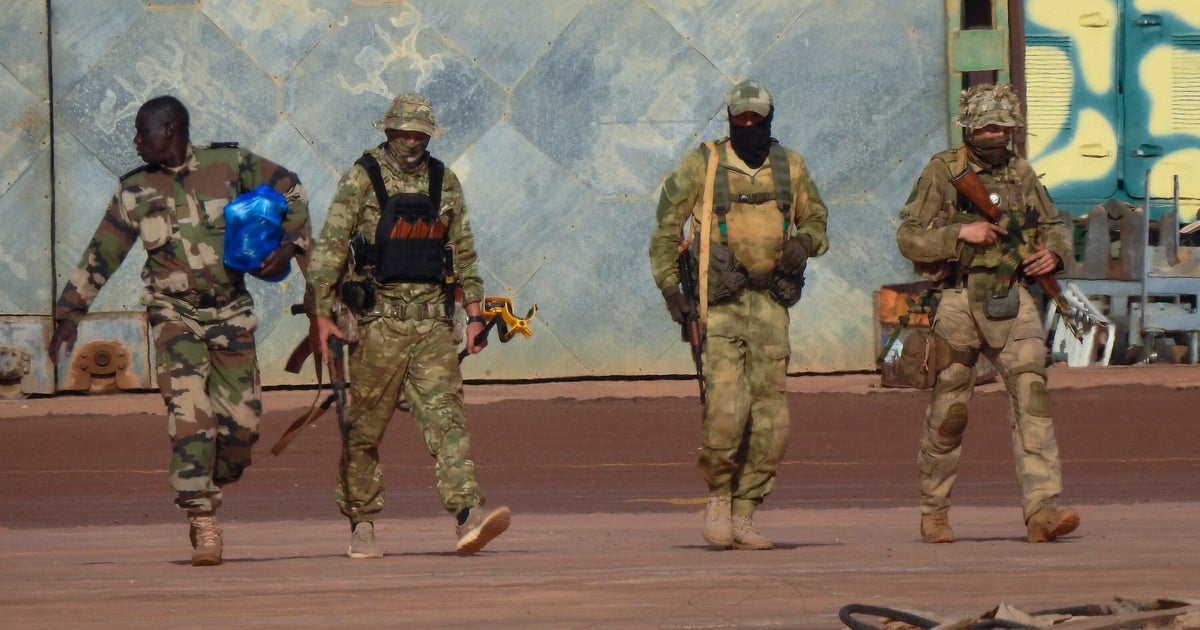
Moreover, Russia’s broader African strategy is evolving. With growing interests in Libya, the Central African Republic, and Sudan, Moscow may be opting to consolidate rather than overextend.
The Security Vacuum and Who Stands to Gain
With Russian forces pulling back, the most immediate consequence is a security vacuum. Malian troops, already stretched thin, are unlikely to maintain control over Kidal’s vast territory without external support.
This creates an opening for several actors:
- JNIM (Group for the Support of Islam and Muslims): The al-Qaeda-affiliated coalition has intensified operations in northern Mali. They’ve already claimed responsibility for recent attacks near Kidal and are poised to expand their influence.
- ISIS-GS (Islamic State in the Greater Sahara): Though smaller, ISIS-GS has shown a willingness to exploit chaos. Their presence in the Tri-Border Area (Mali, Niger, Burkina Faso) gives them mobility and reach.
- Tuareg rebel factions: The National Movement for the Liberation of Azawad (MNLA) and other groups have long sought autonomy for Kidal. With external forces gone, they may attempt to reassert control.
There’s also the risk of ethnic militias filling the gap. In past power vacuums, communal violence between Fulani herders and Dogon farmers has spiraled into massacres. Without a stabilizing force, even localized disputes could ignite broader conflict.
Implications for Mali’s Military Junta
The Malian government, led by Colonel Assimi Goïta, has staked its legitimacy on restoring security. The reliance on Russian forces was meant to accelerate that mission. But now, with Africa Corps retreating, the junta faces a credibility test.
Publicly, Malian officials downplay the withdrawal, calling it a “strategic redeployment.” But behind the scenes, there’s concern. The military lacks the air power, mobility, and intelligence infrastructure to operate effectively in the north without support.
There are also financial implications. Russia’s presence came with strings — reports suggest mineral concessions in gold and uranium were exchanged for military aid. If Africa Corps scales back across Mali, those arrangements may be renegotiated or abandoned, impacting state revenue.
Perhaps most damaging is the symbolic blow. The withdrawal from Kidal could be interpreted as a retreat — not just by Russian forces, but by the Malian state itself. That perception could embolden separatists and weaken morale among rank-and-file soldiers.
Regional Fallout: A Domino Effect?
Mali isn’t the only country in the Sahel grappling with Russian involvement. Niger and Burkina Faso have also seen military takeovers and turned toward Moscow for support.
But the Kidal withdrawal could influence how those nations view their partnerships. If Russian forces are seen as unreliable in the face of sustained attacks, other juntas may hesitate to deepen their dependence.
Conversely, some may interpret the move as tactical — a regrouping rather than a retreat. The Africa Corps could be shifting focus to more defensible areas, like central Mali’s Mopti region, where population centers offer better leverage.
Still, the broader trend is clear: the Sahel is becoming a testing ground for hybrid warfare, where state militaries, foreign mercenaries, insurgents, and local militias vie for control. The withdrawal from Kidal doesn’t end Russia’s role — it may simply redefine it.
What’s Next for Russia in Africa?
Russia’s Africa Corps isn’t leaving the continent — it’s recalibrating. While Kidal may be abandoned, reports suggest increased activity in other regions:

- Central African Republic: Russia maintains a strong presence, training troops and securing mining operations.
- Sudan: Despite the ongoing civil war, Moscow is trying to preserve influence through proxy alliances.
- Libya: Wagner-linked forces continue to support Khalifa Haftar’s eastern faction.
The strategy appears to be one of selective engagement — focusing on areas where Russia can extract maximum political and economic value with minimal exposure.
In Mali, this could mean a shift from direct combat to advisory roles, drone operations, and intelligence sharing. Africa Corps may also prioritize protecting key infrastructure, such as gold mines in the south, over holding remote desert towns.
But the Kidal withdrawal exposes a limitation: even well-armed foreign forces struggle to impose control in regions with deep-rooted grievances, porous borders, and adaptive insurgencies.
A Fragile Future for Northern Mali
The road ahead for Kidal is uncertain. Without a credible security presence, the region risks descending into lawlessness. Humanitarian conditions could deteriorate — aid groups may pull out, and displacement could rise.
At the same time, there’s a growing call — both domestically and internationally — for political solutions. Military force alone has failed to bring lasting peace. Some analysts argue that negotiations with moderate Tuareg leaders, combined with development investment, may be the only way to stabilize the north.
But with the junta focused on consolidating power and insurgents rejecting dialogue, diplomacy remains a long shot.
For now, the withdrawal of Russia’s Africa Corps from Kidal is more than a tactical shift — it’s a signal that the current model of foreign military intervention in the Sahel may be reaching its limits.
Closing: What
This Means for Observers and Stakeholders
The confirmation of Russia’s Africa Corps withdrawal from Kidal is a pivotal moment in the Sahel’s complex conflict landscape. It underscores the volatility of foreign military partnerships and the difficulty of imposing security in ungoverned spaces.
For policymakers, the lesson is clear: military force without political strategy is unsustainable. For regional actors, the challenge is to prevent Kidal’s collapse from triggering wider instability. And for the people of northern Mali, the hope remains that this shift could, in time, open space for a more inclusive and durable peace.
Monitor ground developments closely. Track insurgent activity, assess Malian military capacity, and watch for signs of renewed diplomatic efforts. The next phase in Mali’s crisis won’t be fought only on the battlefield — it will be shaped by decisions made in capital cities, negotiation rooms, and remote desert towns like Kidal.
FAQ
Why did Russia’s Africa Corps withdraw from Kidal? Due to escalating attacks, logistical challenges, and a strategic reassessment of risks versus benefits in maintaining a remote desert presence.
Is this the end of Russian involvement in Mali? No. The withdrawal is limited to Kidal. Russia likely remains engaged in other regions, particularly in advisory, training, and resource protection roles.
Who is most likely to take control of Kidal now? Insurgent groups like JNIM and ISIS-GS, or Tuareg separatist factions such as the MNLA, could attempt to fill the power vacuum.
How will this affect Mali’s national security? It weakens Mali’s hold on the north, stretches military resources further, and may embolden insurgent operations in other regions.
Could French or UN forces return? Unlikely in the short term. Both have withdrawn from Mali amid political tensions, and there’s strong anti-Western sentiment among the current leadership.
Are humanitarian conditions at risk in Kidal? Yes. With deteriorating security, aid organizations may suspend operations, worsening food insecurity and access to healthcare.
What’s the economic impact of the withdrawal? Russia may have secured mineral concessions in exchange for military support. A reduced presence could disrupt those arrangements and affect Mali’s revenue.
FAQ
What should you look for in Russia’s Africa Corps Confirms Withdrawal from Kidal? Focus on relevance, practical value, and how well the solution matches real user intent.
Is Russia’s Africa Corps Confirms Withdrawal from Kidal suitable for beginners? That depends on the workflow, but a clear step-by-step approach usually makes it easier to start.
How do you compare options around Russia’s Africa Corps Confirms Withdrawal from Kidal? Compare features, trust signals, limitations, pricing, and ease of implementation.
What mistakes should you avoid? Avoid generic choices, weak validation, and decisions based only on marketing claims.
What is the next best step? Shortlist the most relevant options, validate them quickly, and refine from real-world results.